

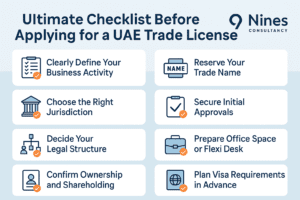
Ultimate Checklist Before Applying for a UAE Trade License
Starting a business in the United Arab Emirates is exciting, but it is also a process where one small mistake can cost you weeks of delay, rejected applications, or unexpected compliance issues later. Many entrepreneurs rush into applying for a trade license without fully understanding what authorities actually expect. That is where problems begin.
Whether you are planning to set up a mainland company in Dubai, a free zone entity in Sharjah, or an offshore structure for international operations, the UAE trade license is the legal foundation of your business. Without proper preparation, you may end up selecting the wrong activity, submitting incomplete documents, or choosing a jurisdiction that does not align with your business goals.
This ultimate UAE trade license checklist is designed to help you prepare everything before you apply. It is written specifically for entrepreneurs, startups, investors, and SMEs who want clarity, not confusion. We break down every decision point, document requirement, authority involvement, cost consideration, and timeline expectation in simple language.
At Nines Consultancy, we regularly see businesses come to us after facing rejections from DED, free zone authorities, or banks. In most cases, the issue could have been avoided with proper planning. This guide ensures you apply once, apply correctly, and move forward confidently.
If you are serious about setting up your company the right way in the UAE, this checklist will save you time, money, and stress.
What Is a UAE Trade License Checklist?
A UAE trade license checklist is a structured preparation guide that outlines everything you must decide, arrange, and verify before submitting your company formation application. It is not just about documents. It includes strategic decisions such as business activity selection, jurisdiction choice, ownership structure, visa planning, and compliance readiness.
In the UAE, trade licenses are issued by different authorities depending on where and how you want to operate. For mainland businesses, licenses are issued by the Department of Economic Development or Department of Economy and Tourism. Free zone licenses are issued by the respective free zone authorities, while offshore licenses follow a separate regulatory framework.
Each authority has its own rules, document requirements, and approval timelines. A checklist helps ensure you meet all of them without guesswork.
Why This Checklist Matters in the UAE Business Environment
The UAE is highly regulated, and compliance starts from day one. Authorities such as DED, MOHRE, GDRFA, and the Federal Tax Authority are interconnected. A mistake at the licensing stage can later impact visa approvals, bank account opening, VAT registration, or even business renewal.
For example, choosing a business activity that requires external approval and not applying for it in advance can delay your license issuance. Selecting the wrong license type may restrict your ability to invoice clients or hire employees. In Dubai and Abu Dhabi, authorities strictly verify activity alignment with office space, visas, and actual operations.
This checklist ensures your business is future ready, not just approved on paper.
Step by Step UAE Trade License Checklist
1. Clearly Define Your Business Activity
Your business activity is the core of your license. UAE authorities maintain an approved list of activities, and you must select from it. You cannot operate outside the approved scope.
Ask yourself:
• What exactly will my business do?
• Will I offer services, trade products, or manufacture goods?
• Will I operate locally, internationally, or both?
Some activities require special approvals from authorities such as KHDA, Dubai Municipality, RTA, or Central Bank. This must be identified before application.
2. Choose the Right Jurisdiction
You must decide whether your business will be:
• Mainland
• Free Zone
• Offshore
Mainland companies allow you to trade anywhere in the UAE and work directly with government entities. Free zones are ideal for international trade, startups, and cost efficiency. Offshore structures are suitable for asset holding and international business without local operations.
Each option has different rules for ownership, office space, visas, and taxation.
Explore: Mainland Company Setup in UAE
Explore: Free Zone Company Setup in UAE
3. Decide Your Legal Structure
Your legal structure defines ownership, liability, and compliance obligations. Common structures include:
• Sole Establishment
• Limited Liability Company
• Civil Company
• Branch Office
Choosing the wrong structure can impact personal liability, visa eligibility, and future expansion plans.
4. Confirm Ownership and Shareholding
Most UAE business activities now allow 100 percent foreign ownership, but some strategic sectors still have conditions.
Before applying, finalize:
• Number of shareholders
• Shareholding percentages
• Manager appointment
These details must match across all documents.
5. Reserve Your Trade Name
Your trade name must follow UAE naming conventions. It should:
• Reflect your business activity
• Avoid restricted or offensive terms
• Not conflict with existing registered names
Trade name approval is mandatory before license issuance.
6. Secure Initial Approvals
Initial approval confirms that the UAE government has no objection to you starting the business. This is not the license itself, but it is a critical step.
Some activities require additional external approvals at this stage.
7. Prepare Office Space or Flexi Desk
Mainland companies usually require Ejari-registered office space. Free zones offer flexi desks or virtual offices depending on the package.
Your office choice affects:
• Number of visas
• Municipality approvals
• Compliance inspections
8. Plan Visa Requirements in Advance
Before applying for the license, estimate how many visas you will need. This includes:
• Investor visas
• Employee visas
• Family visas
Visa quotas are linked to office size and license type.
Documents for Company Setup in UAE
This is one of the most searched questions: documents for company setup UAE.
Typical requirements include:
• Passport copies of shareholders
• Visa or entry stamp copies
• Emirates ID if available
• Passport size photographs
• Trade name approval certificate
• Initial approval certificate
• MOA and AOA
• Tenancy contract or flexi desk agreement
Additional documents may apply based on activity and jurisdiction.
Cost and Timeline Considerations
Trade license costs vary based on:
• Emirate
• License type
• Business activity
• Visa allocation
• Office space
General timelines:
• Trade name approval: 1 to 2 working days
• Initial approval: 2 to 5 working days
• License issuance: 5 to 10 working days
Costs mentioned online are indicative only. Actual fees vary based on requirements, approvals, and authority changes.
Post License Compliance Checklist
Your responsibility does not end after license issuance. You must:
• Register with MOHRE if hiring staff
• Apply for VAT registration if eligible
• Maintain accounting records
• Renew license annually
• Comply with ESR and UBO regulations if applicable
Missing post license compliance can result in penalties.
Why Choose Nines Consultancy
At Nines Consultancy, we do not just process applications. We guide you through decisions that protect your business long-term.
Why clients trust us:
• UAE-licensed and compliance-focused
• Transparent pricing and realistic timelines
• Tailored advice based on your business goals
• End to end support including PRO, VAT, and ISO consultancy
We work with all major UAE authorities and free zones.
Frequently Asked Questions
What is the most important step before applying for a UAE trade license?
Choosing the correct business activity and jurisdiction is the most critical step. Everything else depends on this decision.
Can I change my business activity after license issuance?
Yes, but it requires amendment approvals and additional fees. It is better to choose correctly from the start.
How long does it take to get a trade license in UAE?
On average, 7 to 14 working days if documents are complete and approvals are clear.
Do I need office space before applying?
Yes, in most cases. Mainland companies require Ejari, while free zones may offer flexi desk options.
Is VAT registration mandatory for all businesses?
No. VAT registration depends on turnover thresholds defined by the Federal Tax Authority.
Applying for a UAE trade license should not feel overwhelming. With the right checklist, expert guidance, and clear planning, the process becomes smooth and predictable.
If you want to avoid mistakes, delays, and compliance risks, speak to professionals who understand the UAE system inside out.
Call us: +971 52 975 7543
WhatsApp us: +971 52 975 7543
Book your free consultation with Nines Consultancy today and start your UAE business with confidence.